What Security Professionals Notice Immediately in Public Spaces

When most people walk through a public plaza, government complex, or city street, they
See an open space designed for gathering.
Security professionals often see something very different.
They notice vehicle approach paths, unprotected pedestrian areas, and entry
points that could quickly become vulnerabilities.
Police chiefs, event planners, and public safety leaders are trained to evaluate
environments this way. Their role isn’t only responding to incidents; it’s identifying
potential risks before they become problems.
This mindset is a core part of public safety planning and hostile vehicle mitigation
in modern urban environments.
___________________________________________________________________________________________ What Security Professionals Notice First
When security professionals enter a public space, they instinctively begin evaluating
several key factors.
These include:
Vehicle access routes into pedestrian areas
Open gathering spaces without protective infrastructure
Traffic patterns and vehicle approach angles
Entry points to buildings or secured areas
Emergency access routes and evacuation pathways
What may appear to most people as a simple plaza or sidewalk can represent a
potential vulnerability if vehicle access is unrestricted.
This is why law enforcement and security professionals are constantly assessing
environments and identifying ways to reduce risk while maintaining public accessibility.
___________________________________________________________________________________________
Designing Public Spaces That Are Safe and Open
Good security planning isn’t about making public spaces feel restricted.
In fact, the best security measures are often the ones people barely notice.
Thoughtfully designed protective infrastructure allows people to:
Gather for public events
Walk freely through city streets
Access government buildings
Enjoy parks, plazas, and public venues
…while security measures quietly work in the background.
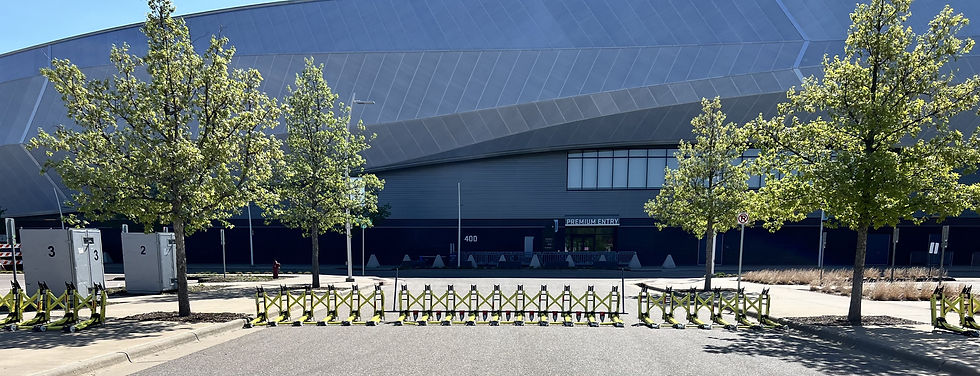
Solutions such as portable vehicle barriers and modular hostile vehicle mitigation
systems allow agencies to quickly secure areas without permanently altering the look
or the function of the space.
These types of systems are particularly valuable for temporary deployments during
events, festivals, and high-traffic gatherings.
Learn more about modular protection solutions like the MVB3X Modular Vehicle Barrier System:
___________________________________________________________________________________________
Why Preparation Matters in Public Safety
For public safety leaders, preparation is everything.
Security professionals must consider how quickly protective infrastructure can be
deployed, transported, and stored when conditions change.
That’s why many agencies rely on portable vehicle barrier systems and trailer
packages that enable rapid deployment for events and emergencies.
These systems help agencies:
Secure pedestrian areas quickly
Control vehicle access during large gatherings
Protect government facilities
Establish temporary security perimeters
When security planning is done well, the public rarely notices the protective measures in
place — but they benefit from them every day.
___________________________________________________________________________________________
Conclusion
Most people experience public spaces without thinking about the risks that may exist.
Security professionals see those spaces through a different lens — one focused on
safety, preparedness, and prevention.
By identifying vehicle approach routes, vulnerable pedestrian areas, and access points,
public safety leaders help ensure that communities can gather, celebrate, and move
freely with confidence.
___________________________________________________________________________________________
Frequently Asked Questions
Why is vehicle mitigation important in public spaces?
Vehicle mitigation helps prevent unauthorized vehicles from entering pedestrian areas
where large crowds gather. Protective infrastructure like vehicle barriers reduces risk
while allowing public spaces to remain accessible.
What is hostile vehicle mitigation (HVM)?
Hostile Vehicle Mitigation (HVM) refers to security strategies and infrastructure designed
to prevent vehicles from being used as weapons against crowds, buildings, or events.
Where are vehicle barriers commonly used?
Vehicle barriers are commonly deployed at:
Pedestrian streets
Festivals and outdoor events
Temporary road closures
Government facilities
Public plazas
Stadiums and arenas
Why do police evaluate vehicle access points in public spaces?
Vehicle access routes can present vulnerabilities in crowded areas. Public safety
professionals evaluate these points to determine where protective infrastructure may be needed.


Comments